Let me guess what happened.
You spent three hours perfecting your resume. You wrote a thoughtful cover letter. You hit "submit" with genuine excitement about the role.
Then... nothing.
A week passes. Nothing.
Two weeks. Still nothing.
You check your email obsessively. You refresh LinkedIn. You wonder if there's a technical glitch. Maybe they didn't receive it? Should you follow up? Or will that make you look desperate?
Sound familiar?
Here's what you need to know: You're not alone, and you're probably not the problem.
According to recent data, the average response rate to job applications is between 2-8%. That means for every 100 applications you send, you might hear back from 2-8 employers. Some studies show even lower rates for entry-level positions.
But here's the kicker: Most of those rejections have nothing to do with your qualifications.
In this guide, I'll explain the 7 real reasons employers don't respond to job applications, and more importantly, exactly what you can do about each one.
⏱️ TL;DR
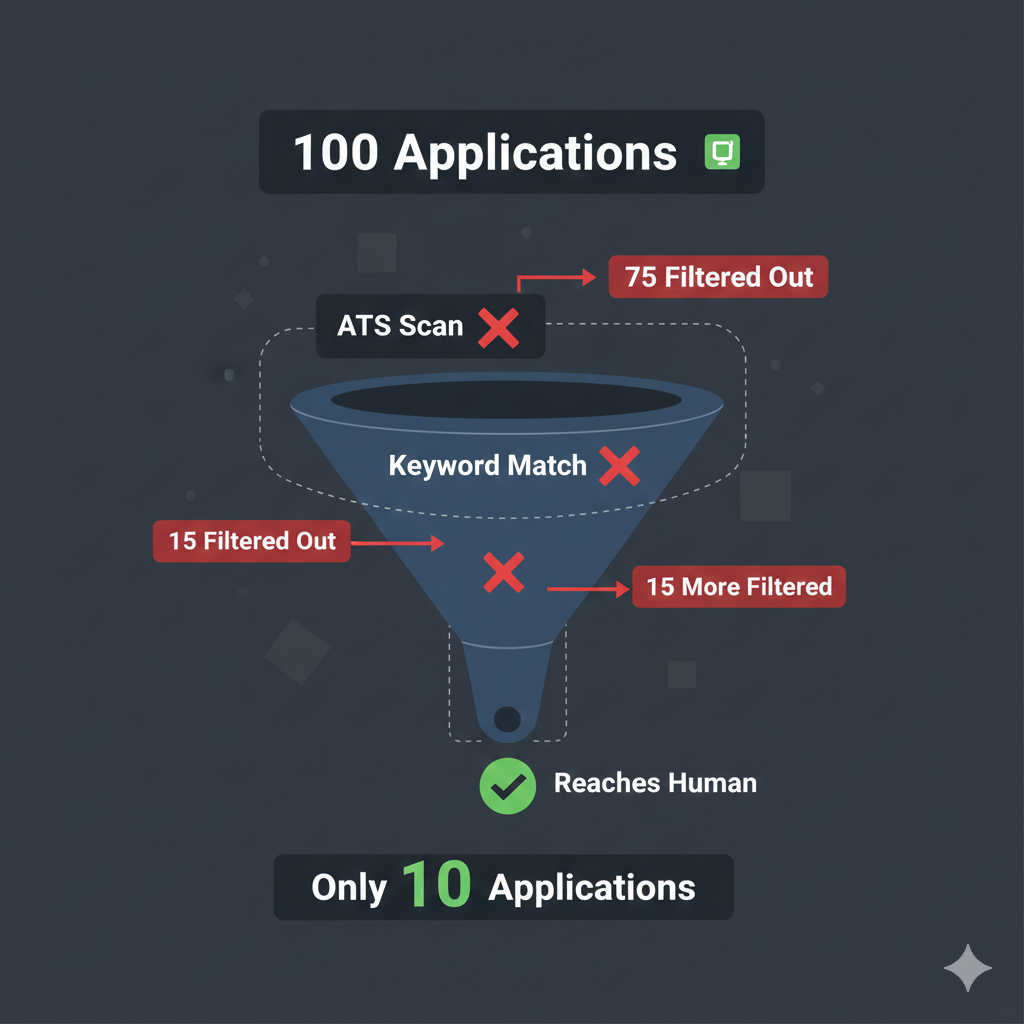
75% of resumes never reach human eyes due to ATS filtering. Your timing, customization, and visibility into the process matter more than your qualifications. Use trackable links to know when employers view your resume, apply within 48 hours of posting, and customize every application for 75%+ keyword match.
The Hard Truth About Job Applications
Before we dive into the reasons, you need to understand how modern hiring actually works.
Your application doesn't land on a hiring manager's desk.
It doesn't go into a pile with other resumes.
It goes into a database.
That database is managed by an Applicant Tracking System (ATS), and here's what happens:
- Your resume gets parsed (converted from a formatted document into data fields)
- The ATS scans for keywords matching the job description
- The system assigns you a match score
- Only the top-scoring candidates make it to human eyes
- The rest disappear into what job seekers call "the black hole"
This system isn't designed to be cruel. It's designed to handle volume.
When a job posting gets 250+ applications (which is common), recruiters can't read them all. They rely on technology to filter.
But that creates a massive problem: Qualified candidates get filtered out because of technicalities, not lack of skills.
Let's break down exactly what's happening and how to fix it.
Reason #1: Your Resume Never Made It Past the ATS
The Problem:
Applicant Tracking Systems reject 75% of resumes before a human ever sees them.
Why? Usually for reasons that have nothing to do with your qualifications:
- Formatting issues - Complex designs, tables, headers/footers, text boxes all confuse ATS software
- Wrong file type - Some systems can't read PDFs properly, others can't handle DOCX
- Missing keywords - If your resume doesn't contain the exact keywords from the job description, the ATS scores you lower
- Keyword stuffing - Ironically, if you over-optimize with too many keywords, some systems flag it as spam
Real Example:
Sarah applied to 40 jobs over three weeks. Zero responses. She had 8 years of relevant experience but used a beautifully designed resume template with columns, graphics, and custom fonts.
The ATS systems couldn't parse her resume properly. Her information ended up scrambled or incomplete in the database. Recruiters saw gibberish instead of her qualifications.
The Solution:
Step 1: Use an ATS-friendly format
- Plain, single-column layout
- Standard fonts (Arial, Calibri, Times New Roman)
- No headers/footers, text boxes, tables, or graphics
- Save as .docx (most compatible format)
Step 2: Match your language to the job description
This is where most people go wrong. They write their resume once and send it everywhere.
Instead, you need to analyze the job description for keywords and incorporate them naturally into your resume.
For example, if the job description says:
- "Experience with project management" → Your resume should say "project management," not "managed projects"
- "Proficient in Salesforce CRM" → Use the exact phrase "Salesforce CRM," not just "CRM tools"
- "Cross-functional collaboration" → Use that exact phrase, not "worked with different teams"
Step 3: Get a match score before applying
This is the game-changer most job seekers don't know about.
Before you submit your application, you can analyze how well your resume matches the job description using AI-powered tools. This shows you:
- Your match percentage (aim for 75%+ for best results)
- Which keywords you're missing
- Which sections need stronger alignment
- Specific recommendations to improve your score
At Hiir.me, our ApplyScore feature does exactly this - it analyzes your resume against the specific job description and tells you your match score plus actionable improvements. You can see your score before applying, not after getting rejected.
Reason #2: You're Competing Against Internal Candidates
The Problem:
Sometimes the job posting is a formality.
Many companies are required by policy (or law) to post positions externally even when they already have an internal candidate in mind. In fact, studies suggest 20-30% of job postings are posted as formalities for positions that are already filled or nearly filled.
Signs this might be happening:
- Very specific, narrow requirements (written around one person)
- Short posting window (filled quickly)
- Job reposted multiple times (they keep rejecting external candidates)
- You get an instant rejection (they're not even reviewing)
The Solution:
You can't control this, but you can identify it faster:
If you get rejected within 24-48 hours of applying, it's often an internal hire situation. Don't take it personally - move on quickly.
Focus your energy on:
- Companies actively hiring (posting multiple roles)
- Newer companies (less likely to have internal pipelines)
- Growing teams (expanding, not just backfilling)
Use your network:
If you know someone at the company, ask them: "Is this role likely to go internal, or are they genuinely looking externally?" This insider information saves you time.
Reason #3: You Applied Too Late
The Problem:
Job postings don't get equal attention throughout their lifecycle.
Here's what actually happens:
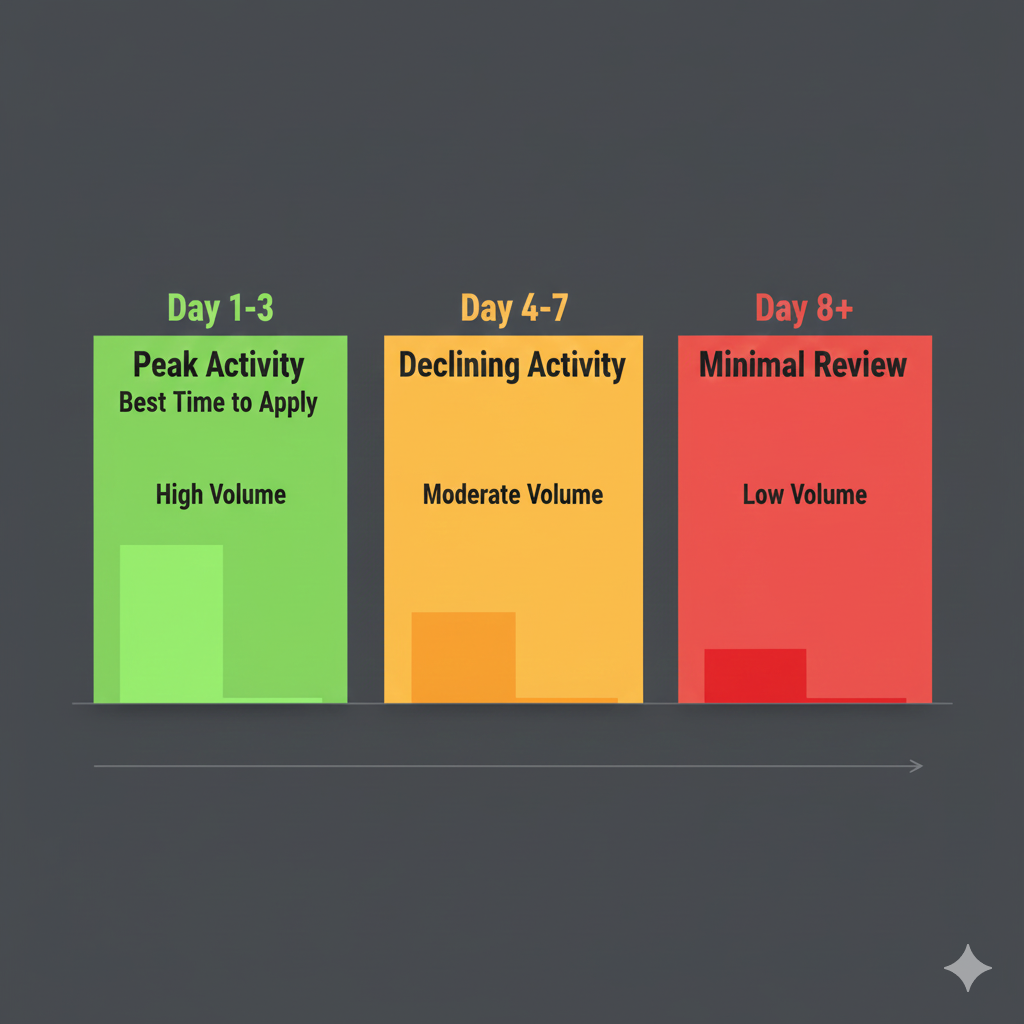
- Days 1-3: Recruiter actively reviews applications as they come in
- Days 4-7: Recruiter has promising candidates, still glancing at new applications
- Days 8-14: Recruiter is interviewing candidates, rarely checking new applications
- Day 15+: Position might already be filled, posting still active
If you apply on Day 12, your application is fighting for attention against candidates already in the interview process. You're not competing on a level playing field.
Real Example:
Marcus applied to a job posting that had been up for 18 days. He had perfect qualifications. He never heard back.
Two weeks later, the same company posted a similar role. Marcus applied within 6 hours of the posting going live. Phone screen within 2 days. Interview within a week. Job offer.
Same company. Same qualifications. Different timing. Completely different outcome.
The Solution:
Timing strategies that work:
Strategy 1: Apply within 24-48 hours of posting
- Set up job alerts on LinkedIn, Indeed, company career pages
- Check alerts 2x daily (morning and evening)
- Have your "base resume" ready to customize quickly
Strategy 2: Look for fresh postings
Most job boards let you filter by "Posted in last 24 hours" or "Posted in last 3 days" - use these filters religiously.
Strategy 3: Use tracking to know when to move on
If a job has been posted for 10+ days and you haven't heard back within a week of applying, your chances are minimal. Don't waste mental energy on it.
This is where trackable links become valuable - if you can see that the employer hasn't viewed your application after a week, you know to move on rather than wondering.
Reason #4: Your Email Went to Spam or Got Lost
The Problem:
Sometimes it's genuinely technical.
- Email filters send your application to spam
- File size too large (resume + portfolio + cover letter)
- Corrupted attachment
- Wrong email address (typo in the application)
- Company changed their application email and didn't update the posting
The Solution:
For email applications:
1. Keep total attachment size under 2MB
- Compress large PDFs
- Don't attach massive portfolio files unsolicited
2. Use professional email address
3. Test your attachments
- Send yourself a test email first
- Verify files open correctly
4. Include text in email body
- Don't just send attachments with no context
- Brief intro + cover letter in body + resume attached
For online application portals:
1. Check confirmation
- You should get a confirmation email or screen
- If not, it might not have submitted properly
2. Save confirmation number
- Some systems provide application IDs
- Useful for follow-up
3. Verify upload
- Before hitting submit, verify all required fields are filled
- Check that resume uploaded correctly (some systems show preview)
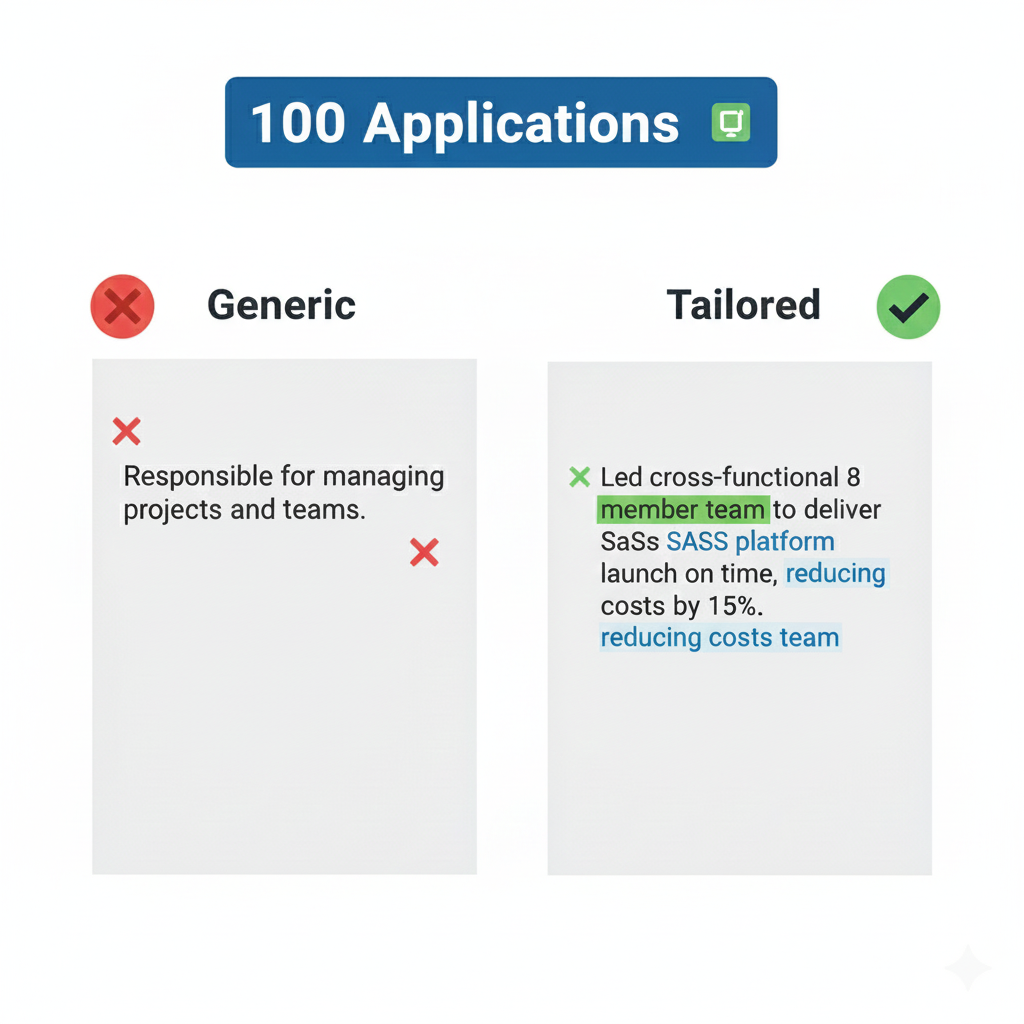
Reason #5: Your Application Looked Generic (Because It Was)
The Problem:
Recruiters can spot generic applications instantly.
Signs you sent a generic application:
- Resume shows no connection to their specific needs
- Cover letter could apply to any job in your field
- No mention of the company name or role-specific requirements
- Skills listed don't align with what they're asking for
The brutal truth: If your resume took you 5 minutes to send, the recruiter will spend 5 seconds reviewing it.
Real Example:
Jessica sent the same resume to 60 companies over two months. Two responses.
Then she started customizing. She spent 20-30 minutes per application:
- Adjusted her skills section to match each job description
- Rewrote her summary to highlight relevant experience
- Reorganized bullet points to emphasize what each employer wanted
Next 20 applications: 7 responses. Same qualifications. Better targeting.
The Solution:
The customization process that works:
Step 1: Analyze the job description
Read it thoroughly. Highlight:
- Required skills (must-haves)
- Preferred skills (nice-to-haves)
- Key responsibilities
- Repeated words or phrases (these are priorities)
Step 2: Adjust your resume sections
Professional Summary:
Rewrite your 2-3 sentence summary to mirror the role. If they want "data-driven marketing leader," your summary should mention data-driven decision making and marketing leadership.
Skills Section:
Reorder skills to put their requirements first. If they emphasize "Python" and "SQL" but you list them at the bottom under "Additional Skills," move them to the top.
Experience Bullets:
Emphasize projects and results that match their needs. You don't need to rewrite everything - just reorder to highlight what's most relevant.
Step 3: Use modular resume components
Here's a time-saving approach: Build multiple versions of each resume section:
- 2-3 different professional summaries (for different types of roles)
- Multiple skills sections (technical vs. leadership vs. creative)
- Different bullet points emphasizing different strengths
When you see a new job, you can assemble a customized resume in 15 minutes by selecting the right components instead of starting from scratch.
This is the foundation of Hiir.me's modular profile system - build reusable components once, then mix and match for each opportunity.
Reason #6: They're Not Actually Hiring (Right Now)
The Problem:
Some job postings are:
- Evergreen postings - Always collecting resumes for potential future needs
- Market research - Seeing what talent is available before committing to hire
- Backup planning - Posting in case a current employee leaves
- Compliance postings - Legal requirement to post even if they have a candidate
These "ghost jobs" waste your time and energy.
The Solution:
Red flags for ghost jobs:
- Posted by staffing agencies with vague details ("Premier tech company seeks...")
- Same job posted for months without being filled
- Extremely broad requirements ("Entry-level opportunity for experienced professional")
- No specific responsibilities listed
- Company glassdoor reviews mention "always hiring" or high turnover
What to do:
Research the company before investing time:
- Check LinkedIn - are they actually growing?
- Look at their recent hires - are they filling this type of role?
- Check news/funding - any recent layoffs or hiring freezes?
If something feels off, move to the next opportunity.
Reason #7: You Have No Visibility Into What's Actually Happening
The Problem:
This is the root cause of all the frustration.
You don't know:
- Did they receive your application?
- Did anyone actually look at it?
- How many times did they review it?
- When did they last view it?
- Should you follow up, or would that be annoying?
You're making decisions in the dark.
And that lack of visibility creates anxiety, wasted effort, and poor outcomes.
Think about it: If you knew an employer had viewed your resume three times this week, you'd follow up immediately. That's a strong signal of interest.
But you don't know. So you wait. And while you're waiting, they assume you're not interested because you haven't followed up. The opportunity dies.
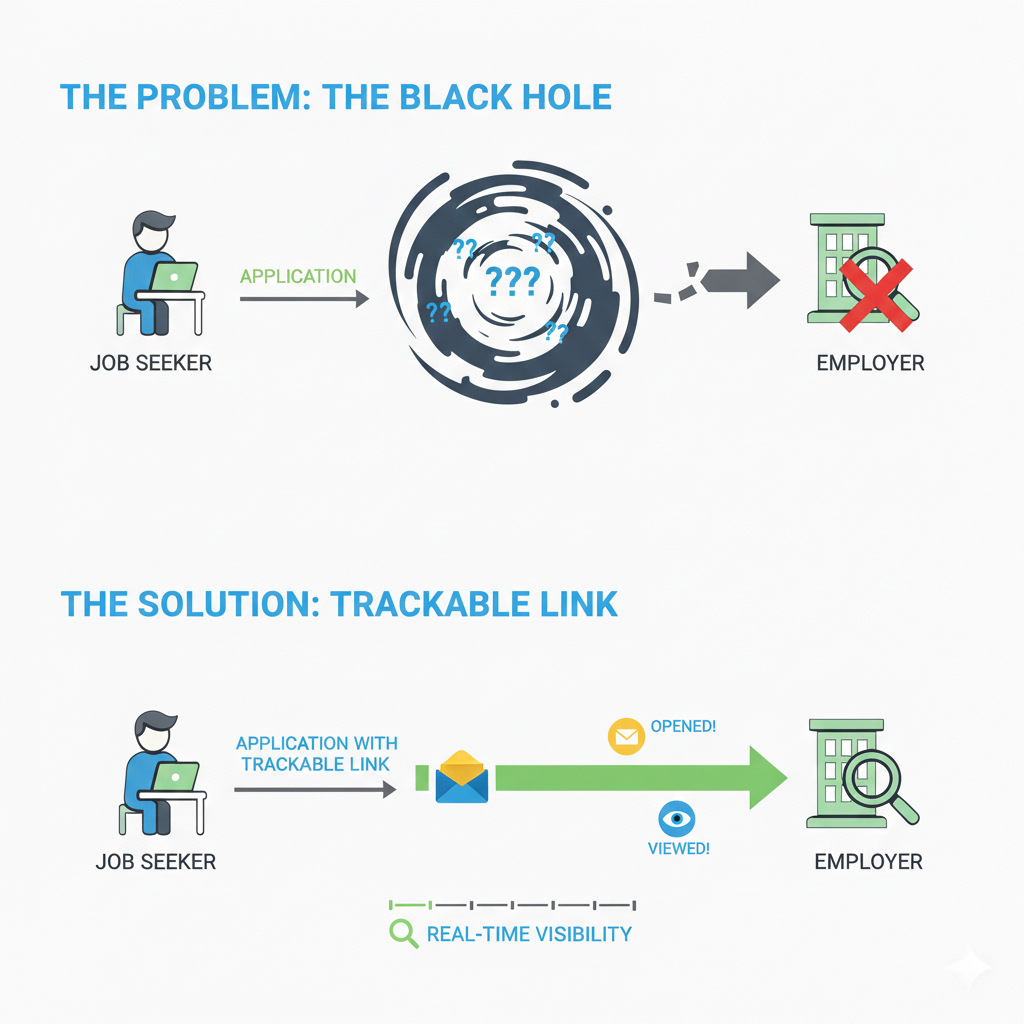
The Visibility Problem:
Traditional job applications are one-way streets:
You → Application → ??? → Employer
You send information into a void and hope something happens.
The Solution:
The transparency revolution: Trackable applications
What if you could see:
✓ When an employer views your application ✓ How many times they viewed it ✓ What device they used (mobile vs. desktop - shows interest level) ✓ When to follow up based on actual engagement
This isn't hypothetical. This technology exists.
At Hiir.me, every job opportunity you create can generate a trackable link that you include in your application. When the employer clicks that link to view your profile, you get notified.
Real scenario:
- You apply on Monday
- Employer views your profile Tuesday afternoon (you get notification)
- They view again Thursday morning (another notification)
- Thursday afternoon, you send a follow-up email: "I noticed you reviewed my application this week. I'd love to discuss how my experience with [specific skill] can help with [specific company goal]."
You're not guessing. You're responding to real engagement data.
This changes everything:
- No more wondering - You know when they looked
- Strategic follow-ups - Based on data, not random timing
- Move on faster - If no views after a week, you know it's not happening
- Prove your value - Show initiative by noticing their engagement
Why This Matters More Than You Think
Every application you send without visibility is:
- A missed follow-up opportunity - Companies want to see initiative
- A wasted effort - If the ATS filtered you out on Day 1
- A learning opportunity lost - You don't know what's working and what's not
But when you have visibility:
You can start treating job searching like a data-driven process instead of a hope-and-pray approach.
You can answer questions like:
- Which companies are actually interested in me?
- Do my applications get viewed at all, or is it an ATS problem?
- When should I follow up for maximum impact?
- Which types of jobs get the most employer engagement?
This is the difference between:
- Applying to 100 jobs blindly and getting 2 responses
- Applying to 30 jobs strategically and getting 8 responses
Same effort. Better intelligence. Better outcomes.
Your Action Plan: What to Do Starting Today
Here's exactly what to do right now:
Step 1: Audit Your Current Resume (30 minutes)
- Is it ATS-friendly? (single column, standard fonts, no graphics)
- Does it match job description language, or is it generic?
- Is it saved as .docx?
Step 2: Create Your Base Components (1 hour)
- Write 2-3 professional summaries for different types of roles
- Create targeted skills sections
- Reorganize experience bullets by theme (technical/leadership/results)
Step 3: Set Up Job Alerts (15 minutes)
- LinkedIn, Indeed, company career pages
- Filter for "last 24 hours"
- Check 2x daily
Step 4: Implement Tracking System (15 minutes)
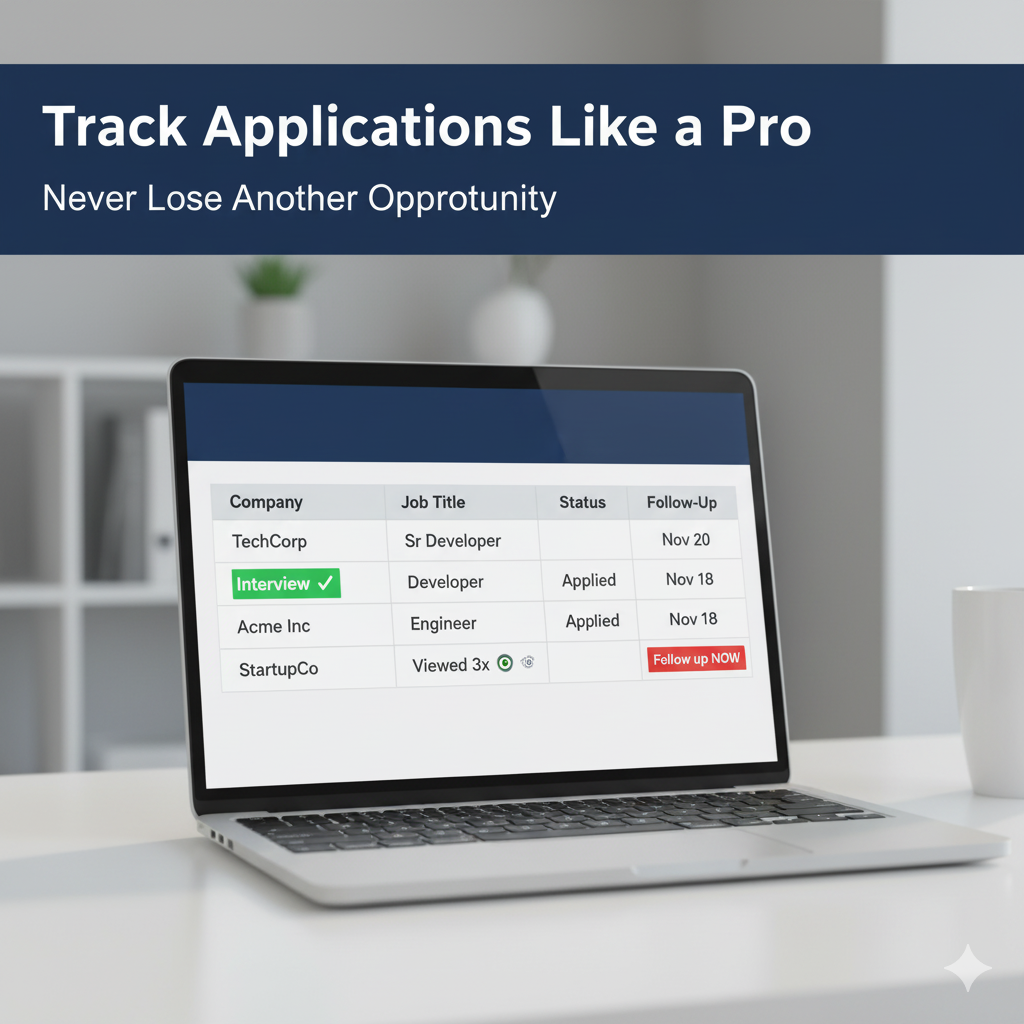
- Start tracking every application (date, company, job title, when to follow up)
- Consider using trackable links for visibility into employer engagement
Step 5: Quality Over Quantity (Ongoing)
- Stop spray-and-pray applications
- Spend 20-30 minutes customizing each application
- Only apply to jobs where you have 75%+ match
Step 6: Follow Up Strategically (Ongoing)
- 1 week after applying: Brief email expressing continued interest
- If you have trackable data showing multiple views: Follow up within 24 hours
Step 7: Analyze and Adjust (Weekly)
- Which applications got responses?
- Which got viewed (if you're tracking)?
- What patterns do you see?
- Adjust your approach based on data
The System That Makes This Easier
Here's the problem with this advice: It requires discipline.
You need to:
- Customize every resume
- Track every application
- Analyze job descriptions for keywords
- Remember to follow up at the right time
- Learn from patterns
Most people start strong, then it falls apart after 10-15 applications.
The solution? Use tools that automate the systematic parts.
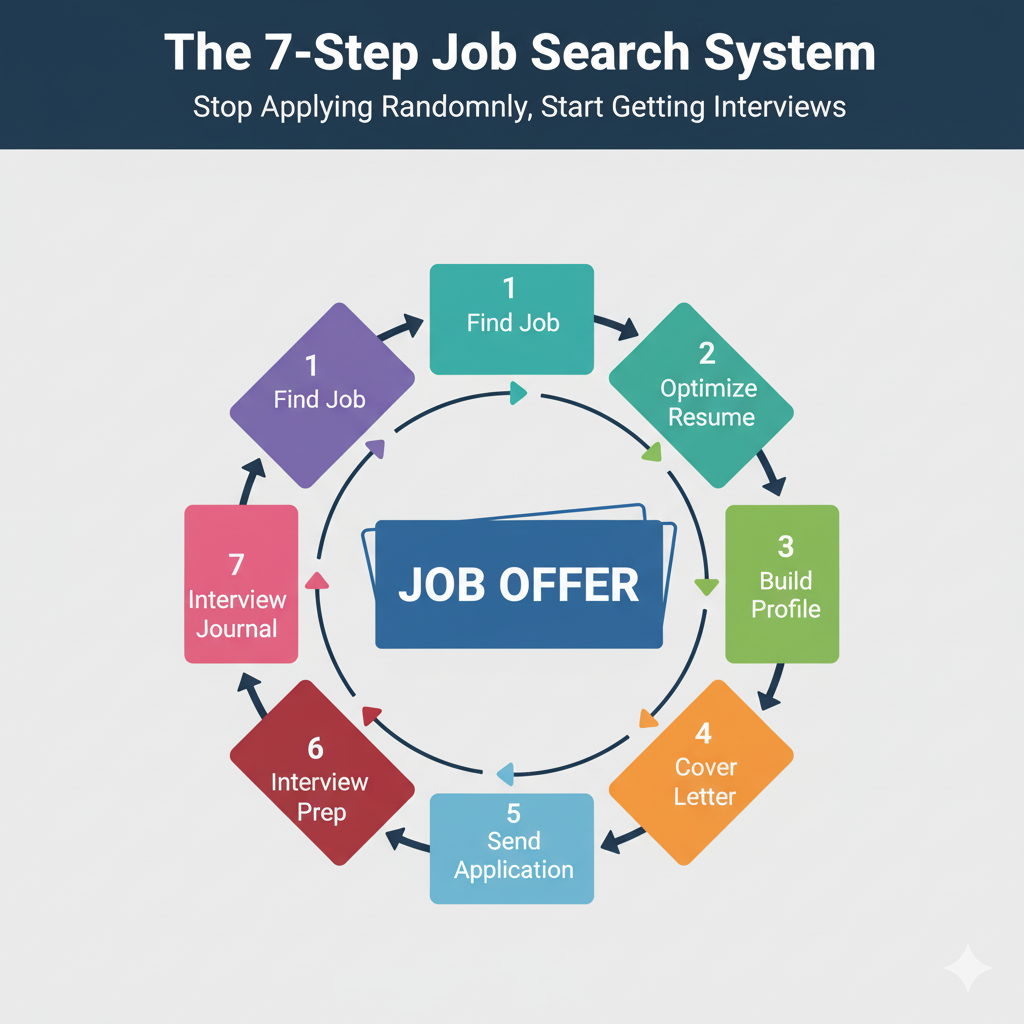
This is exactly why we built Hiir.me - a complete 7-step workflow for each job opportunity:
1. Import job details - Paste URL, AI extracts requirements
2. Optimize your resume - Get match score + specific improvements (ApplyScore)
3. Build tailored profile - Modular components for fast customization
4. Generate cover letter - AI-powered personalization in minutes
5. Create trackable link - Know when employers view your application
6. Prepare for interviews - AI-generated questions specific to this job
7. Log interview experience - Learn and improve continuously
Every step tracked. Every opportunity optimized. Complete visibility.
Try it free: Your first 3 complete workflows are free. No credit card required.
After that, it's $19/month unlimited. Compare that to:
- Lost opportunities from applications you can't track: Priceless
- Time saved with modular profiles: 10+ hours per week
- Improved response rates from better targeting: Multiple job offers
[Start Your Free Trial →]
The Bottom Line
If employers aren't responding to your applications, it's probably not because you're unqualified.
It's because:
❌ Your resume didn't pass the ATS ❌ Your timing was off ❌ Your application looked generic ❌ You had zero visibility into what was actually happening
The good news? All of these problems are solvable.
You don't need a new degree. You don't need more experience.
You need a better system.
Start implementing these changes today, and I promise you'll see different results within 2 weeks.
Stop wondering why employers don't respond.
Start knowing - and start getting responses.
Frequently Asked Questions
Q: How long should I wait before following up?
A: One week is standard. But if you're using trackable links and you see they've viewed your application 2+ times, follow up within 24 hours of the last view.
Q: Should I apply even if I don't meet 100% of the requirements?
A: Yes, if you meet 70%+ of the requirements. Job descriptions are often wish lists. But make sure you're optimizing your application to show how you meet their priority requirements.
Q: Is it worth customizing my resume if I'm applying through "Easy Apply"?
A: Absolutely. Easy Apply doesn't mean they're reviewing applications any differently. Your resume still goes through ATS filtering and human review. A customized resume stands out.
Q: What if I've already applied to 50+ jobs without hearing back?
A: Don't keep doing the same thing. Audit your approach using this article, make the necessary changes, and start fresh with new applications. Track everything from now on so you can see what's working.
Q: Are trackable links creepy or unprofessional?
A: No - they're smart. You're not tracking personal information, just professional engagement. It's like read receipts for emails - employers expect candidates to be strategic about their job search.
Q: How many applications should I be sending per week?
A: Quality over quantity. 5-10 highly customized applications per week will outperform 50 generic ones. Focus on applications where you have strong match and genuine interest.
Related Articles
- How to Track Job Applications Like a Pro - Complete system for organizing your job search
- The 7-Step Job Search System That Actually Works - The complete workflow for systematic job searching
Stop sending applications into the void.
Get visibility. Get responses. Get hired.